Building an NFT lending protocol around refinancing
500+ loans and $80M+ in loan value. NFT lending already had established players, so we lent real capital on every major platform until we found the problem none of them solved, then built Gondi's protocol around it: loan refinancing.
- Loans originated
- 500+
- Gondi's public site, 2025
- Loan value (USD)
- 80M+
- Gondi's public site, 2025
- Total value locked (USD)
- 40M
- Gondi's public site, 2025
Team: 2 founders, 1 designer (me), dev team · Duration: ~10 months · Tools: Figma, Balsamiq, Miro · Industry: Web3 / DeFi / NFT lending
The problem: a market with no clear winner
Florida St. had a successful NFT curation product, but the lending space already had established players. A “me too” product wasn’t an option. We needed a structural edge.
- Crowded market. Multiple platforms already offered NFT-backed loans. UI alone wouldn’t differentiate us.
- Complex mental model. Terms, APR, duration, collateral value and liquidation risk made most platforms expert-only.
- Two-sided marketplace. Borrowers and lenders have different goals and workflows. Both needed to work from day one.
- Trust in a trustless environment. Users were wary of new protocols. The product had to feel credible and transparent immediately.
We needed one problem that no other lending platform solved.
Discovery: finding the edge by becoming the user
We created accounts on the major lending platforms and started lending weekly with real capital. That showed us a small group of power users controlled the space. Win them over with something no one else offered, and the rest of the market follows.
Our best insight came from losing deals to other lenders on timing rather than terms. In that period I validated 3 MVPs, and they led us to pivot toward product-market fit.
Solution: a lending protocol built around refinancing
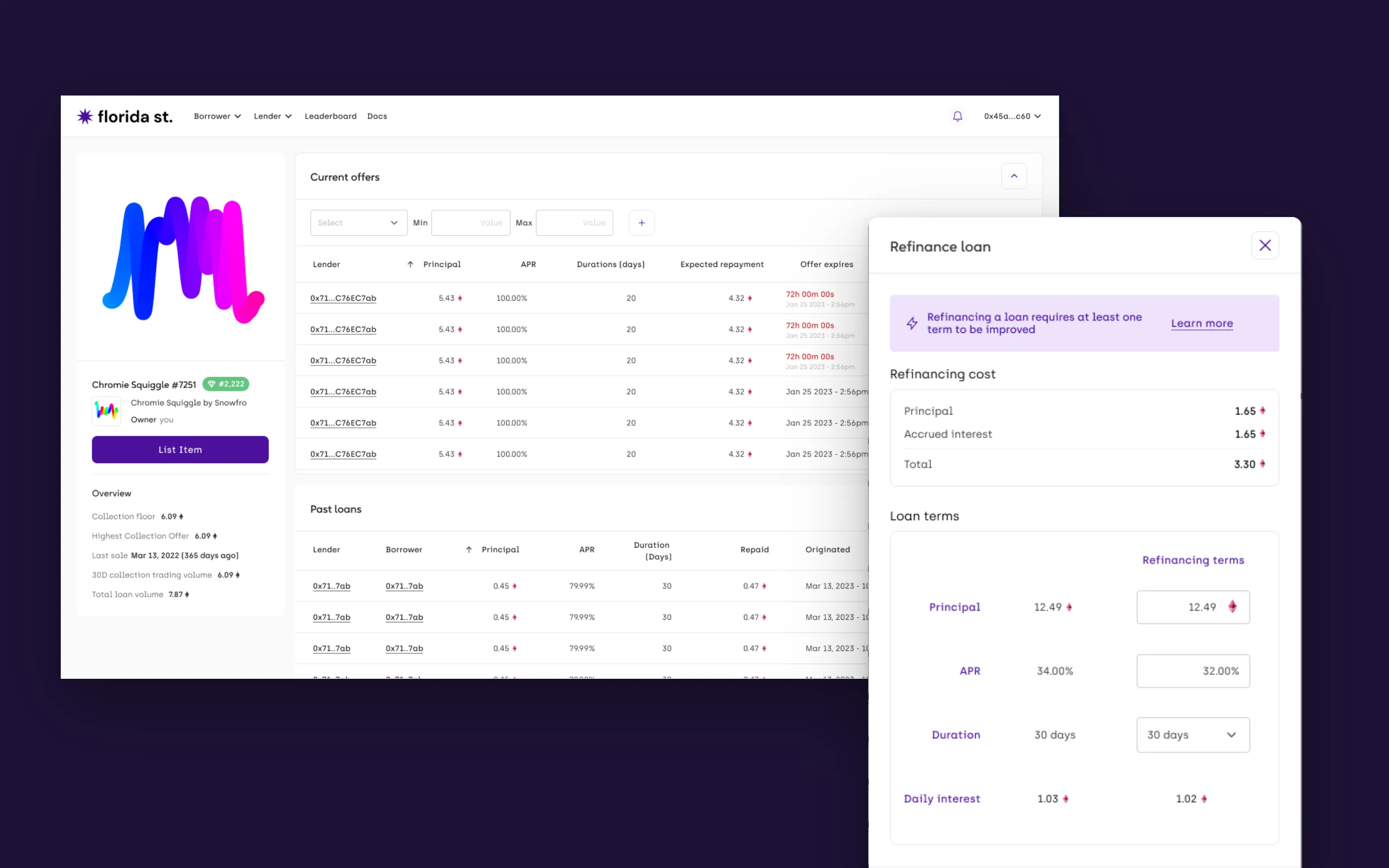
The core decision was to make loan refinancing the structural center of the product. Any lender could take over any active loan by offering strictly better terms. Borrowers automatically got better deals over time, and the biggest lenders had a reason to show up.
- Borrower experience. Select an NFT, create a loan request, track active offers.
- Lender experience. A dashboard of active loans, current offers and refinancing opportunities.
- Leaderboard and gamification. Points for loans, refinancing, collection offers and referrals, to bootstrap the two-sided marketplace.
Borrowers
- Access liquidity without selling their NFTs
- Save time with instant refinancing by lenders
- Save money by getting the best loan terms
Both sides, and the Web3 community
- A bigger, more active lending market
- More liquidity and opportunities for artists and collectors
Lenders
- Save time refinancing existing loans instead of hunting for new ones
- Deploy more capital faster to grow the portfolio
- Underwrite unique loan terms whenever they want
We tested every design decision against one question: does this make it easier for better offers to win?
- Progressive disclosure. Complex financial concepts revealed as the user needs them.
- Visual hierarchy per user. Lenders see APR first. Borrowers see repayment first.
- Confidentiality. The refinancing algorithm is proprietary, so the design made its output legible without exposing the logic.
Validation: from discovery to production in sprints
I worked in weekly sprints with the dev team, adjusting the UI as feedback came in from real users and our Discord community. Discord is where we learned how early adopters were using the product.
- Loan creation had too many decision points. We front-loaded the most important choice (individual NFT vs. collection offer).
- Refinancing needed side-by-side comparison. Showing current and proposed terms side by side, with directional arrows, made the decision instant.
- The leaderboard needed anti-gaming rules. Points required several iterations so users couldn’t game the system by refinancing their own loans.
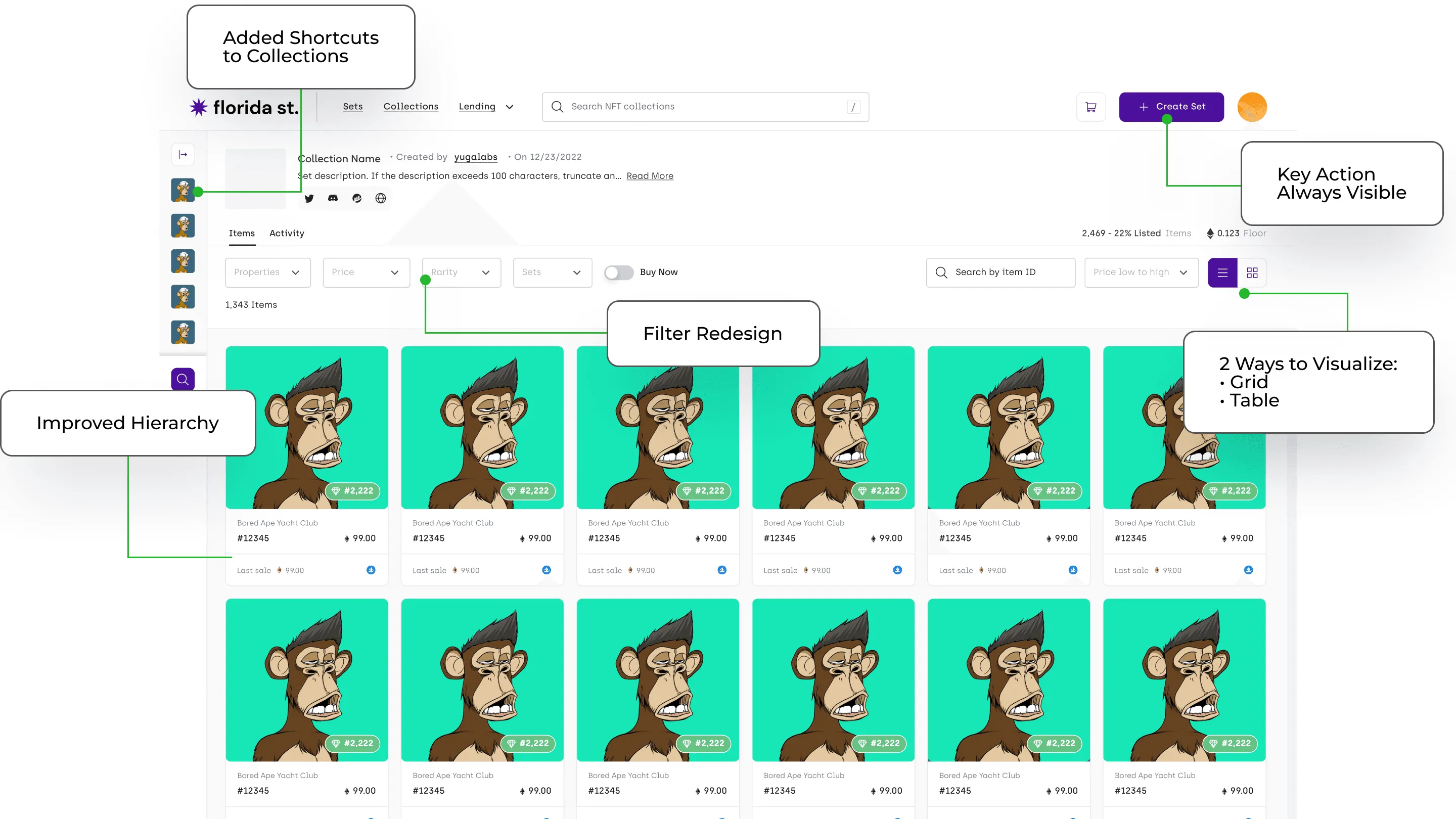
Before
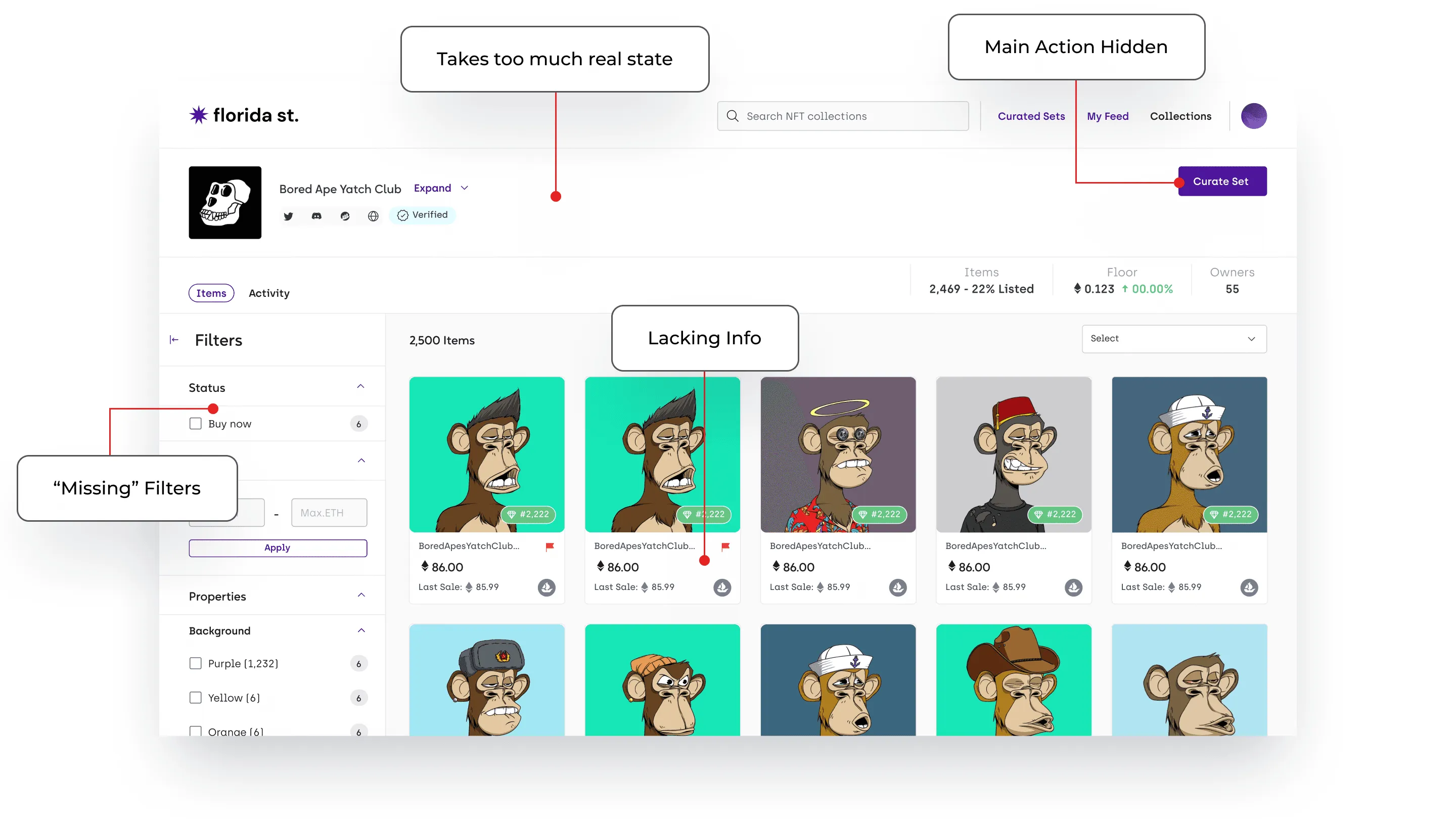
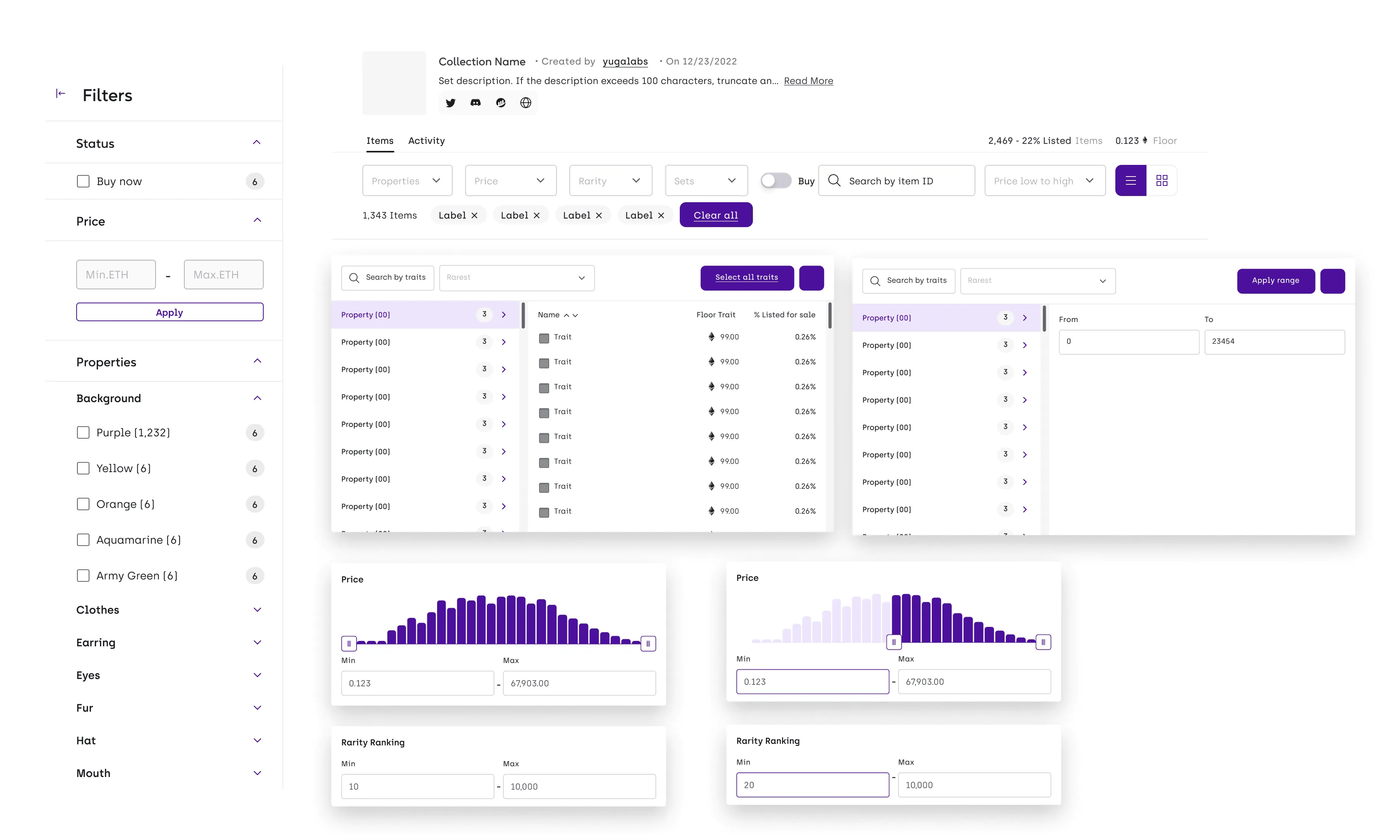
After
Business impact: launching into a competitive market
The product launched as Gondi.xyz with loan refinancing as its defining feature.
- A new category mechanic. Loan refinancing wasn’t a standard feature in NFT lending. Gondi introduced it as a core protocol mechanic.
- Three complete surfaces. Borrower, lender and leaderboard, designed as one system from zero.
- Early supply-side adoption. Prominent lenders saw refinancing as a way to improve returns, so adoption started on the capital side.
- Room to grow. The modular design let the team add products after launch.
Key takeaways
- Become the user, literally. Competitive analysis tells you what exists. Using the product yourself tells you what’s broken.
- From 0 to 1, the UVP is the product. We built the whole protocol around one insight instead of a long feature list.
- Design for two users at once. The refinancing modal had to work for the lender making the offer and the borrower receiving it.
- Web3 had few UX patterns to borrow. Every flow, component and hierarchy was a decision we had to make ourselves.